



Spicy Wontons in Chilli Sauce
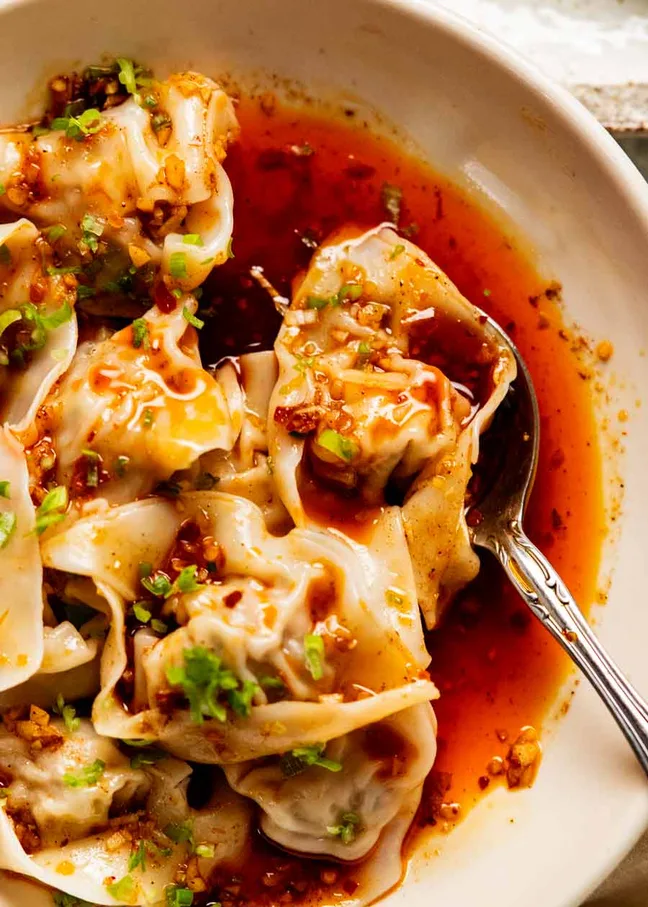
Spicy Wontons in Chilli Sauce
The Din Tai Fung chilli sauce for wontons is less oily, less vinegary and slightly less spicy than standard Chinese dumpling houses. Because of this, they are generous with the amount of sauce so you can eat each slippery, plump, juicy wonton with a spoonful of the sauce without blowing your head off with a chilli explosion.
Ingredients
Method
Chilli oil sauce for wontons:
- Mix spices – Put the garlic, sugar, chilli flakes, sichuan pepper, five spices and stock powder in a medium mixing bowl.
- Heat oil – Heat the chilli oil and vegetable oil in a small frying pan over medium heat until hot. Pour over garlic mixture. Enjoy the sizzle! (Don't worry, it doesn't spit)
- Add sauces: – Whisk in soy sauce, rice vinegar and hot water. The oil will remain a little separated on top. Set aside while you make wontons.
Serving:
- Cook wontons – Bring a large saucepan of water to the boil. Add wontons and cook until they float: 4 minutes for freshly made, 6 to 8 minutes from frozen.
- Assemble – Transfer to serving dish using a slotted spoon. Pour over sauce, add an extra drizzle of chilli oil (if you dare!), sprinkle with green onion. Serve immediately!
Notes
SPICE note: Pretty spicy, not blow-your-head-off. To make this kid-friendly, omit the chilli flakes and sub the chilli oil with sesame oil.
1. Homemade wontons trump Asian store frozen wontons, trump regular grocery store wontons. If I don’t have homemade wontons in the freezer, it makes me insecure so I’ll do an emergency run to the Asian store. Classic wonton filling is pork and prawns/shrimp (this is the filling in my wontons recipe). But feel free to use any type of wonton! 2. Chilli flakes – Takes the sauce to “pretty spicy” range but very enjoyable for people who love spicy Asian food. Omit, or stir in at the end bit by bit, for less spicy. 3. Sichuan pepper – Whitish pepper powder that has a “cold” spiciness to it, used in famous dishes like Kung Pan chicken. I use pre-ground for convenience here because it’s a small amount. Kudos to anyone who makes their own: toast, grind, sift, measure. 4. Chinese Five Spice Powder – blend of (you guessed it!) five spices that is sold at regular grocery stores, in the dried spices aisle. 5. Chinese chicken stock powder (photo in post) – Slightly cleaner, less artificial flavour than Western chickens stock powders. I use Knorr brand, yellow can with a green lid. Read in post for more info, I am a fan! It’s my go-to sub for liquid stock. 6. Chilli oil – Stick to a Chinese brand to be safe (unless you have one you know) as chili oils vary in spiciness between Asian countries. In my experience, Chinese chilli oils are relatively consistent in spiciness. Chilli crisp will also work here but obviously adds lots more crispy “bits” into the sauce and less oil! LESS SPICY OPTION: sub some or all with sesame oil (toasted, the brown oil, not yellow un-toasted). Obviously no longer spicy, but a lovely sesame-forward flavour! 7. Soy sauce – Use either light or all purpose soy sauce. But not dark soy sauce – flavour is too strong and the colour is too intense! More on which soy sauce to use when here. 8. Leftovers – Like all dumplings, wontons are best served freshly made but will last 3 days in the fridge. Microwave reheating is best, so they stay nice and juicy. Nutrition per wonton, assuming 12 wontons and all the sauce is consumed.
1. Homemade wontons trump Asian store frozen wontons, trump regular grocery store wontons. If I don’t have homemade wontons in the freezer, it makes me insecure so I’ll do an emergency run to the Asian store. Classic wonton filling is pork and prawns/shrimp (this is the filling in my wontons recipe). But feel free to use any type of wonton! 2. Chilli flakes – Takes the sauce to “pretty spicy” range but very enjoyable for people who love spicy Asian food. Omit, or stir in at the end bit by bit, for less spicy. 3. Sichuan pepper – Whitish pepper powder that has a “cold” spiciness to it, used in famous dishes like Kung Pan chicken. I use pre-ground for convenience here because it’s a small amount. Kudos to anyone who makes their own: toast, grind, sift, measure. 4. Chinese Five Spice Powder – blend of (you guessed it!) five spices that is sold at regular grocery stores, in the dried spices aisle. 5. Chinese chicken stock powder (photo in post) – Slightly cleaner, less artificial flavour than Western chickens stock powders. I use Knorr brand, yellow can with a green lid. Read in post for more info, I am a fan! It’s my go-to sub for liquid stock. 6. Chilli oil – Stick to a Chinese brand to be safe (unless you have one you know) as chili oils vary in spiciness between Asian countries. In my experience, Chinese chilli oils are relatively consistent in spiciness. Chilli crisp will also work here but obviously adds lots more crispy “bits” into the sauce and less oil! LESS SPICY OPTION: sub some or all with sesame oil (toasted, the brown oil, not yellow un-toasted). Obviously no longer spicy, but a lovely sesame-forward flavour! 7. Soy sauce – Use either light or all purpose soy sauce. But not dark soy sauce – flavour is too strong and the colour is too intense! More on which soy sauce to use when here. 8. Leftovers – Like all dumplings, wontons are best served freshly made but will last 3 days in the fridge. Microwave reheating is best, so they stay nice and juicy. Nutrition per wonton, assuming 12 wontons and all the sauce is consumed.